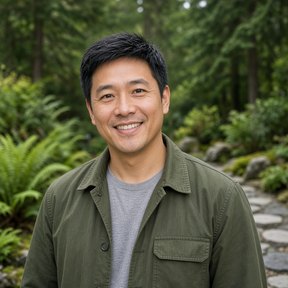
Kai has spent nine years building the business. Marketing currently runs through yard signs, a neighborhood app and a seasonal mailer.
The goal is to grow lawn care and hardscaping routes where Portland west-side demand is strongest.
See how an illustrative landscaping company can move from scattered marketing and a context-free AI chat to live market research, a shared strategy and campaigns ready for review.
An illustrative example. Tualatin Valley Greenworks and Kai are fictional and are not Intellisea clients. Market figures publish only with sources and dates.
Like many growing local businesses, the team has tools, vendors and reports—but no persistent view of the market joining them together.
Kai has spent nine years building the business. Marketing currently runs through yard signs, a neighborhood app and a seasonal mailer.
The goal is to grow lawn care and hardscaping routes where Portland west-side demand is strongest.
Each link names the state whose market data it uses.
Durable public facts establish the state’s business environment. Reviewed reporting adds context without pretending that yesterday’s headline is permanent.
Trying an AI assistant is reasonable. The gap appears when a conversation has to become a repeatable marketing operation.
No live market feed. No persistent context. No deployment system. No scoreboard.
Scout gives the agents shared market context before they build the strategy. The figures below are aggregated, dated and sourced—not customer data.
Demand and county search context: Intellisea Scout analysis of Google Trends and search-volume data, refreshed 2026-10-25. Scores are relative indexes for the displayed example portfolio.
| County | Opportunity | Monthly searches | Growth | Avg. cost per click | Ad competition | Top search |
|---|---|---|---|---|---|---|
| Multnomah County | 100/100 index | 1,170 | +14% year over year | $4.69 | 25/100 | lawn care |
| Washington County | 14/100 index | 550 | +5% year over year | $15.32 | 33/100 | lawn care |
| Clackamas County | 14/100 index | 390 | Insufficient year-over-year series | $10.94 | 35/100 | lawn care |
Cost per click and competition: Intellisea Scout analysis of Google Ads keyword data, 2026-10-25.
Monthly searches for each phrase in the keyword portfolio, summed across the measured counties.
Source: Intellisea Scout analysis of Google Trends and search-volume data, 2026-10-25.
Monthly searches across the measured counties, Oct 2025 to Sep 2026. Peak: May 2026, 2,960. Low: Jan 2026, 1,500.
Source: Intellisea Scout analysis of Google Trends and search-volume data, 2026-10-25.
The local view in the animation is drawn from 78 real neighborhood cells and 113 ZIP codes. The numbered pins are the ZIPs with the most estimated searches.
ZIP and neighborhood searches are estimates apportioned from measured county demand by households. Intellisea Scout analysis of Google Trends and search-volume data, 2026-10-25.
Scout pairs demand with the households behind it, so Kai can match offers to the people searching.
| County | Households | Homeowners | Household income $100k+ | Households with children |
|---|---|---|---|---|
| Multnomah County | 347,392 | 54.1% | 43.6% | 24.0% |
| Washington County | 232,366 | 60.9% | 52.3% | 31.8% |
| Clackamas County | 162,762 | 71.3% | 50.2% | 31.0% |
Source: U.S. Census Bureau, American Community Survey 5-year estimates, 2019–2023.
These are the findings from the Oregon research run. Each one carries the evidence, a recommended action and the Launchpad draft it starts.
Multnomah County drives 1,170 of the region’s 2,110 monthly landscaping searches, up 14% year over year, while clicks cost $4.69, the lowest of the three counties.
Washington County sees 550 monthly searches, but clicks average $15.32, more than three times Multnomah’s $4.69, and demand grew 5%.
‘Lawn care’ is the top phrase in Multnomah, Washington and Clackamas counties, with 970 of the region’s 2,110 monthly searches.
Clackamas County contributes 390 monthly searches, the fewest of the three, yet has the highest competition score at 35 and a $10.94 click cost.
Intellisea Scout region findings, 2026-10-25. Findings reflect that research run and were reviewed against the county data.
Researches demand, costs, households and ZIP codes around Beaverton. Refresh dates stay visible.
Turns the findings into lanes the team can inspect: Multnomah County landing page; Washington County organic content; Lawn care hub page.
Lines up local pages and campaigns for Search · Maps · Social, with brand memory and approval carried through.
It is a coordinated system of agents that researches Oregon markets, turns findings into a visible strategy, prepares campaigns and reports what changes. Your team remains the reviewer and decision-maker.
A chat can help owners and their teams draft or think. It does not arrive with live Oregon market context, persistent brand memory, connected deployment workflows and a scoreboard. Intellisea joins those parts into one operating system.
Yes. Scout can move from national and state demand into counties, cities and local competitive patterns around Beaverton. The available detail depends on the research scope and source coverage.
The example ends at review and approval. Your team can inspect, edit and approve work before it goes live.
No. It is a clearly labeled fictional example. The business story illustrates the workflow; only sourced and dated market figures are presented as factual.
Each link names the state whose market data it uses.
Give your agents the context to find the counties, cities and customers that matter in Oregon—then turn the research into a strategy your team can launch.